
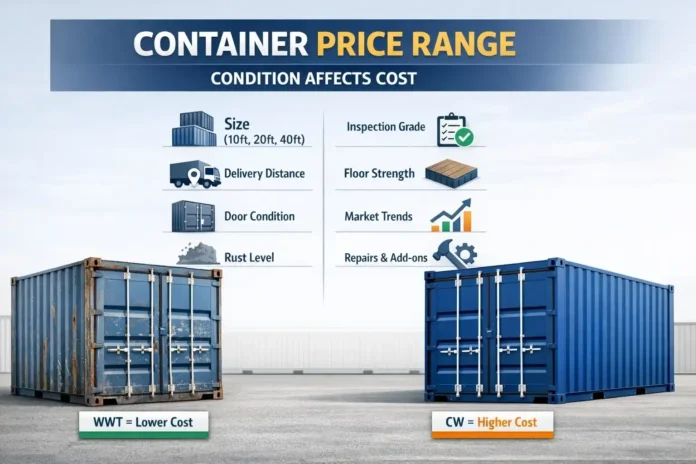
Everything seems the same while purchasing shipping containers until you start comparing listings from different sellers. One may sell containers claiming they are “cargo worthy”, whereas the other may sell them “wind and water tight” and they are the same price for the same sized containers. In shipping containers that are “wind and water tight” vs “cargo worthy”, a significant pricing (and potentially quality) difference may be noticed. When trying to analyze trends in shipping containers, the fastest method for understanding price over a range of sizes while keeping the price from being over the value set for a shipping container is to check shipping container cost trends, check pricing and determine the difference in quality.
When assessing the value of a shipping container, condition is the most important factor to consider. In the guide to WWT and CW differences, I will cover how to price WWT and CW containers and include tips that will help reach a solution.
In the case of determining container value, pricing and condition and the value of containers are the most important factors. To containers, not every condition label is a marketing gimmick or a marketing term. Storage containers on land and shipping containers fit for long distance shipping are two different things.
Understanding Container Condition Grades Before You Compare Prices
Before looking at numbers, it helps to know what you are paying for. Condition labels are not just marketing terms. They reflect whether the container is suitable for long-distance shipping or mainly for storage on land.
What WWT (Wind and Watertight) Usually Means
Containers that are considered WWT (wind and watertight) are usually old containers that do keep rain and wind out when closed. They are good for storage and do not need to have good cosmetics.
Containers labeled as WWT often show signs of aging, such as dents, surface rust, and scratches. The floors are usually intact and the doors work, although they may need to be adjusted a little. The main promise of the container is that the unit is sealed, it is a storage unit that is still functional.
What CW (Cargo Worthy) Usually Means
Containers that are Cargo Worthy (CW) have been assessed and marked as suitable for transport and or export. While it primarily depends on the seller and the inspection, CW units are most often in a better structural condition than the rest, which includes better door functionality, corner posts, and overall strength of the container.
If you are arranging shipments of good across the border and require a container that complies with the more rigorous standards, CW containers are the best options. They are more expensive, but they help avoid problems such as rejections on the units or costly repairs down the line.
Check Shipping Container Cost Trends and Why Prices Fluctuate
The cost of shipping containers is subject to market volatility. When analyzing the cost trends of shipping containers, pay special attention to the aforementioned indicators.
Conclusion on Market Supply Chain
As steel prices fluctuate in the market, it also affects the price of shipping containers because shipping containers are made of steel. Therefore, it affects the shipping container inventory (new and used). When the price of steel rises, due to the shipping container being more expensive, the demand increases for used containers.
Inventory and Port Supply
When you are closer to the main container ports, center of freight routes, and container depots, you will be able to get and supply inventory at a less expensive rate. If you are in an area with a lot of containers, it will be less expensive and easier to get inventory because there is less supply needed. If you are in an inland area, there will be additional supply and transport costs that will be added on to the price.
Construction Cycles and Supply Chain Fluctuation
There are a lot of places where demand spikes in the spring and summer. The farming and construction projects increase in those warm months. People want to get shipping containers when the prices tend to be the highest and they don’t understand that the price quote they received in the previous month is no longer relevant.
Container Pricing by Size
When looking at the prices of containers, they need to be in the same price range and you need to be looking at the same sized containers. If you are comparing containers to other containers from a different price range, it is an unequal comparison.
10ft Containers
10ft containers are great for small areas for a retail lot and for also at a storage lot. They tend to be more expensive, and they are a lot less available on the market, but they are convenient.
20ft Units: A Versatile Configuration
20ft containers make for great storage units, mini workshops, and inventory storage for retail merchants. They are easily delivered, which, combined with their size, makes them one of the most popular configurations.
40ft Units: Most Cost-Effective Option for Bulk Storage
When it comes to large amounts of items such as business inventory and or furniture, a 40ft container is most likely the most cost effective option per foot. However, the logistics of delivery for these larger containers are more complicated.
High Cubes: Versatile Additions
High Cube (HC) containers are one foot and one inch taller internally. This is an added bonus for storage projects, racking, conversions, and anything else that requires a little more vertical space.
For container conversions like an office, studio, or storage with shelving, the added convenience of as HC will offset the additional costs of these units.
Price Comparisons: CW vs WWT Containers
When container prices are explored, WWT containers are often more affordable than CW. However, CW containers can be more economical over time if you value quality.
Why WWT Containers Cost Less
Containers that cost less WWT are often used more than CW containers. Containers that cost less than CW containers tend to have more cosmetic damage. A container used for dry storage provides no less than presentational value.
When using a container to store items such as tools, inventory that is only used during certain seasons, or household items, WWT containers are generally the most cost efficient option.
Why CW Containers Cost More
Containers that cost more are CW containers. Containers that cost more are a considerable amount more costly than WWT containers for reasons such as more durable materials, and being closer to a shipping ready state.
CW containers are more appealing and less damaged and have a higher chance of passing sea-first inspection for transport.
Repair Risks and Hidden Costs
Many buyers are surprised by this. A container that is considered cheap may have a high associated repair cost with it.
When choosing containers, rust repair, door seal replacement, box lock installation, and floor patching, choosing a CW container should reduce repair cost. These are more predictable when paying more.
Choosing Guidelines Between WWT and CW for the Project
The container that is most appropriate depends on the specific purpose of the container, as well as the purpose of the container.
Select WWT When Practical Storage is Needed
If you require dry, practical, storage on private property, at a job site, or behind a business, WWT is often the right choice.
Many WWT units can function perfectly for years with basic maintenance such as rust protection and lubrication of the doors.
Select CW When Shipping, or Greater Dependability, Are Needed
If your plans include shipping goods, exporting the container, or using it for more sensitive items, CW is a better fit.
It is also a better choice when you are making an investment in modifications like insulation, electrical, or climate control systems and do not wish to start with a questionable base structure.
One-Trip Containers for Higher Level Uses
While this guide is centered on WWT vs CW, “one-trip” containers (which are a type of near-new units) often attract people who are looking for a clean look and minimal wear, and are willing to pay a premium.
These units are typically associated with retails or storage solutions that are visible to the end customer, as well as container home solutions.
Smart Buying Tips to Avoid Overpaying
While you are monitoring shipping container pricing trends, you need to perform these practical tests prior to making your choice: container pricing based on size, pricing ranges for containers, and container pricing based on your location.
First, request real photos of the actual unit instead of sample photos. Second, deliver and unload methods should be confirmed. Third, if you’re able, check doors and seals. Door repairs are one of the most common surprise costs.
From experience, the best deals come from comparing at least three quotes, and being more flexible with paint and minor cosmetic wear. A container with dents and a solid structure can be a better value than a cleaner one with weak doors.
Final Thoughts: The Best Way to Compare WWT vs CW Prices
Container pricing is more than just the size. The condition impacts the durability, resale value, and the repairs you’ll incur within the first year.
If you want to know the trends in shipping container costs, the first thing to do is outline the container pricing by size, analyze the range of container prices, and then look at the condition vs. location, delivery, and inspection details.
WWT is a more affordable option for everyday storage, while CW is more reliably and meets the transport standards. With some up front comparison, you can buy with confidence and mitigate the most common pricing traps.
Most Frequently Asked Questions
What is the general difference between the WWT and CW containers?
In general, WWT containers are used to store units that keep the wind and rain out. CW containers are used for stronger and more versatile purposes, like cargo transport.
Are WWT containers suitable for long-term storage?
WWT containers are good for long-term storage, assuming the unit is equipped with good door seals, a sturdy floor, and that some rust protection is applied periodically.
Is the CW option always worth the extra cost?
CW is worth it if you need a more reliable structure, doors that function more smoothly, or shipping export compatibility. If you just want storage, a WWT would be the better value.
What is the fairest way to compare container prices?
Comparing the same size containers with similar delivery distances, and the same condition grade is the fairest way to compare container prices. Make sure to check if taxes, delivery, and unloading are included in the price before pricing out the containers.
What container size is the best value?
Most customers feel that 40ft containers offer the best value, while 20ft containers are easier to deliver and better for storage. What constitutes the best value for you will depend on your storage and delivery accessibility.

